|




|
Eröffnung der Ausstellung "A Burnt Out Case?"
am 31.August, um 19 Uhr in die NGBK, Oranienstrasse 25 ein.
1. September – 14. Oktober 2012 täglich von 12-18 Uhr, Do-Sa 12-20 Uhr geöffnet
Künstler_innen: Ulf Aminde/ Anders Smebye, Franziska Angermann, Gesa Glück, Kaoru Hirano, Henry Kleine, Julia Lazarus, Thomas Mader, Karin Michalski, Sabrina Schieke, Cathleen Schuster/ Marcel Dickhage und Linda Weiss
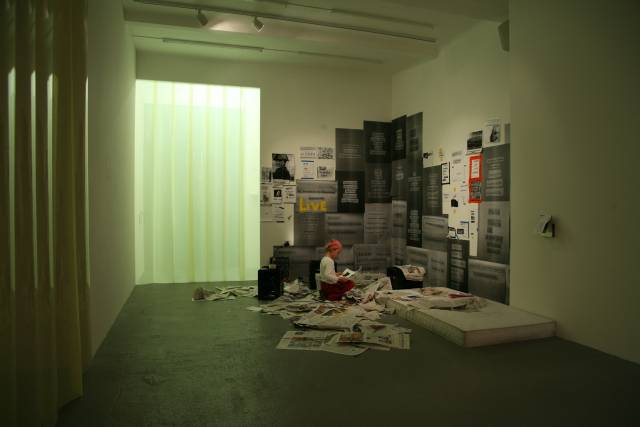
Burnout wird zunehmend zu einer Diagnose unserer Leistungsgesellschaft – zeugt er doch von der Bereitschaft, alles zu geben und das scheinbar Undurchführbare zu ermöglichen, Grenzen zu überschreiten und über sich hinauszuwachsen. Jenseits des medialen Diskurses will das Ausstellungsprojekt "A Burnt-Out Case?" einen anderen Blick auf das Phänomen Burnout provozieren.
In einer öffentlichen Ausschreibung wurden Künstler_innen, Aktivist_innen und interdisziplinäre Arbeitsgruppen eingeladen, vielschichtige Sichtweisen auf den Burnout zu entwerfen. Den ausgewählten Arbeiten ist gemein, dass sie sich weigern, einen klaren Befund oder gar eine Lösung anzubieten. Ausstellung und Rahmenprogramm offerieren vielmehr Fragen, Reflexionen und Visionen. Sie provozieren das Nachdenken über den Burnout als Zeitphänomen. Die künstlerischen Auseinandersetzungen mit dem Thema gehen unter anderem der Frage nach, welche Zusammenhänge zu gesellschaftlichen Strukturen und Mechanismen der Arbeitsgesellschaft bestehen. Welche alternativen Arbeits- und Handlungsmodelle lassen sich der aktuellen Dynamik entgegensetzen? Wie lässt sich den aktuellen Vereinnahmungen, medialen Fixierungen und Opferdiskursen entkommen?
Die Projektgruppe der NGBK, die das Vorhaben „A Burnt-Out Case?“ konzipiert und realisiert hat, plädiert für einen neuen, reflektierten Umgang mit dem Thema, der nicht im „Schneller-Höher-Weiter“ hängen bleibt. Ein besonderer Fokus liegt auf der Perspektive von Künstler_innen und Kreativschaffenden, die oftmals in einem prekarisierten Umfeld arbeiten und leben und die zugleich als Vorreiter_innen flexibilisierter und deregulierter Arbeitswelten gehandelt werden.
_ _ _ _ _ _ _ _ _ _ _ _ _ _ _
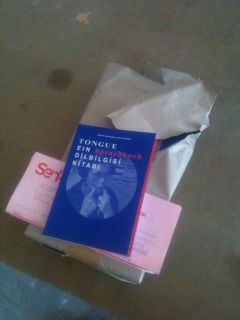
OUT NOW & AVAILABLE IN BOOKSTORES
«TONGUE»
Nadin Reschke & Oda Projesi
Berlin 2012, 200 Seiten mit Illustrationen und fotografischen Abb.,
14,8 x 10,5 cm, broschiiert, Deutsch/Englisch
_ _ _ _ _ _ _ _ _ _ _ _ _ _ _
Das Leben ist anderswo
Galerie im Körnerpark, Berlin-Neukölln
Eröffnung: 3. Juni 2012, 12 Uhr
Laufzeit: 5. Juni bis 22. Juli 2012
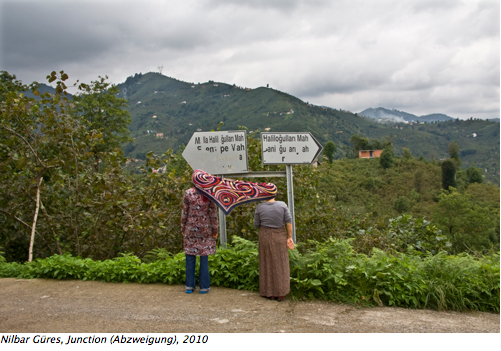
Künstler/innen: Oreet Ashery (IL/GB), Mariana Castillo Deball (MX/DE), Chan Sook Choi (KR/DE), Kaspars Goba (LV), Nilbar Güres (TR), Bodil Furu (NO), Mathilde ter Heijne (NL/DE), J&K (Janne Schäfer, DE; Kristine Agergaard, DK), Nadin Reschke (DE), Maya Schweizer (FR/DE)
Kuratorin: Dorothee Bienert
Die Ausstellung nimmt das 275-jährige Bestehen des Böhmischen Dorfes in Berlin zum Anlass, über die Potenziale von kultureller und religiöser Vielfalt für die Zukunft der Einwanderungsgesellschaft zu sprechen. Eine der wichtigsten Voraussetzungen für die Produktivität kultureller Pluralität ist die Wahrung des Menschenrechts der Glaubens- und Gewissensfreiheit. In ihren Installationen, Fotografien und Videos beschäftigen sich die Künstler und Künstlerinnen auf sehr unterschiedliche Weise kritisch mit den Themen Glauben, Diversität und Toleranz/Intoleranz.
_ _ _ _ _ _ _ _ _ _ _ _ _ _ _
Herzlich willkommen zur Grand Book Release Party von TONGUE am 17.März 2012
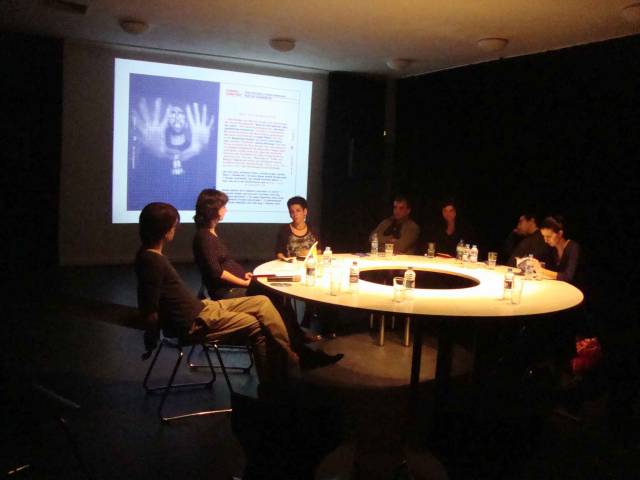
Wir starten am 17.März 2012 mit einem Tongue Book Talk im Kunstraum Kreuzberg um 17:00 und heißen Dich/ Sie dann herzlich willkommen zur Grand Book Release Party von TONGUE um 21 Uhr im Ballhaus Naunynstrasse.
TONGUE lässt das Klischee des Turmbaus zu Babel zurück – einen Ort, an dem alle Sprachen gleichzeitig existieren, wenn auch getrennt voneinander – und geht einen Schritt weiter: Wie kann man eine neue Sprache schaffen, indem man von der Alltagssprache einzelner statt von der Sprache einer ganzen Gruppe ausgeht? Aus dem Austausch der Kursteilnehmer mit der Kreuzberger Nachbarschaft ist ein Wörterbuch mit eigener Terminologie entstanden, das die Künstlerinnen von Oda Projesi (Istanbul) und Nadin Reschke (Berlin) nun vorstellen.
Wir freuen uns auf Euer Kommen.
Oda Projesi (Istanbul) und Nadin Reschke (Berlin)
Veranstaltungsorte:
Kunstraum Kreuzberg
Ausstellung IN ANDEREN WORTEN. Der Schwarzmarkt der Übersetzungen – mit zeitgenössischen Kulturen handeln
Mariannenplatz 2
10997 Berlin
Ballhaus Naunynstrasse
Naunynstr. 27
10997 Berlin (Kreuzberg)
_ _ _ _ _ _ _ _ _ _ _ _ _ _ _
Public Idea
Brunswiker Pavillon, Kiel, 01.07.-10.07.2011
Eröffnung / Opening:30.06.2011 um 19 Uhr, 30/06/2011 at 7 p.m.
Begrüßung / Introduction: Prof. Rainer W. Ernst, President of the Muthesius Academy of Fine Arts and Design, Kiel
Brunswiker Pavillon, Brunswiker Str. 13, 24103 Kiel
Öffnungszeiten:Di-Do 10-17 Uhr, Fr 10-16 Uhr, Sa und So 11-16 Uhr, Montags geschlossen
KünstlerInnen / Artists:
Yeni Anýt (Istanbul), Volkan Aslan (Istanbul), Nancy Atakan (Istanbul), Irena Eden /Stijn Lernout (Wien), Antje Feger / Benjamin F. Stumpf (Hamburg / Kiel), Mark Henley (Berlin / Istanbul), Matthias Krause (Berlin / Istanbul), Gümüþ ÷zdeþ (Istanbul), Iz ÷ztat (Istanbul), Nadin Reschke (Berlin), Katinka Theis (Berlin), Mehmet Vanlýoðlu (Istanbul)
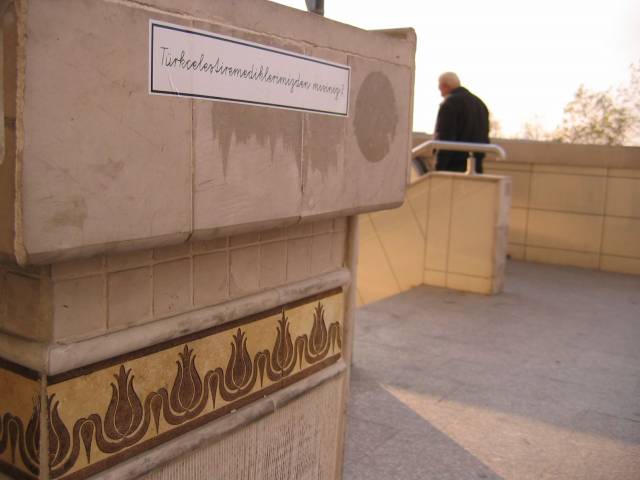
Die Ausstellung PUBLIC IDEA zeigt deutsche und türkische Positionen, die Aspekte der urbanen Entwicklung und der multiplen Identität Istanbuls künstlerisch reflektieren. Zur Eröffnung wird die Publikation „PUBLIC IDEA – Artistic Approaches to the Urban Sphere of Istanbul" (Revolver Publishing, Berlin, 2011) mit Beiträgen der beteiligten KünstlerInnen und Stadtforscher vorgestellt.
_ _ _ _ _ _ _ _ _ _ _ _ _ _ _
Other Possible Worlds,
Entwürfe diesseits von Utopia
NGBK Berlin, 30. April – 13. Juni 2011
Eröffnung: 29. April 2011
Beitragende: Dorothee Albrecht, Antimuseum, Maria Thereza Alves, Cedric Bomford, CCA Lagos, Leung Chi Wo, Chto delat?, Chua Chye Teck, Cybermohalla, Kiluanji Kia Henda, ExRotaprint, Huang Xiaopeng, Johanna Kandl, Hubert Lobnig, Ralo Mayer, Gabi Ngcobo, Periferry, Oda Projesi and Nadin Reschke, Isa Sonjasdotter, The International Academy of Art Palestine, The Israeli Center for Digital Art, TkH (Walking Theory), The Public School, Yoel Diaz Vazquez, Xu Tan, Moira Zoitl
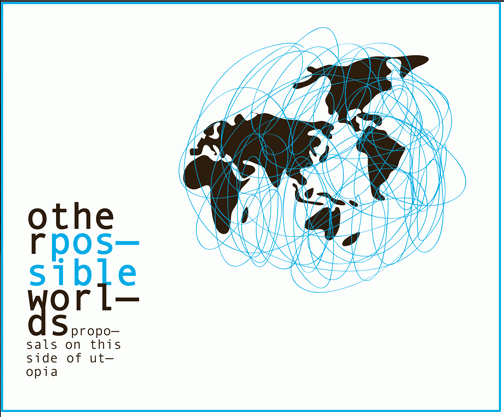
Welche Rolle können Kunstprojekte, Kunsträume, selbstorganisierte Akademien und Labs bei der Entwicklung von Vorstellungen von einer Welt jenseits einer rein ökonomischen Globalisierung spielen? Projekte aus verschiedenen Teilen der Welt werden eingeladen, andere Lebenswirklichkeiten vorzuschlagen und zu testen - vom kleinen künstlerischen Versuch bis zum gesellschaftlichen Experiment. Themen wie der Umgang mit kulturellen Differenzen, dem Klimawandel, mit Nivellierungsprozessen und Unübersichtlichkeiten bilden die Basis für einen gemeinsamen Frageraum.
Die Grundlage von Other Possible Worlds – Entwürfe diesseits von Utopia bildet eine Sammlung von Ideen, Konzepten, Modellen, Begriffen, Projekten, Kits und Handlungsformen. Sie ist als fortlaufend erweiterbarer Pool für kommende Projekte in anderen Teilen der Welt angelegt und kann in verschiedenen Formaten übernommen und genutzt werden. Die NGBK wird zu einem gemeinsamen Frage- und Untersuchungsraum für verschiedenste Formate, künstlerische Beiträge und Installationen, Workshops, Präsentationen, Gespräche und Videoscreenings.
Ein Projekt der Arbeitsgruppe der NGBK: Dorothee Albrecht, Berit Fischer, Franziska Lesak, Hubert Lobnig, Moira Zoitl
English version:
Which roles can art projects, art spaces, self-organized academies and labs play in developing conceptions of the world that go beyond purely economic globalization? Projects from various parts of the world are invited to propose and test out other realities of life and world views, from small artistic attempts to social experimentation. Topics such as dealing with cultural differences, climate change, processes of levelling out and confusing complexities form the basis for a common space in which to rise questions.
The basis for Other Possible Worlds – Proposals on this Side of Utopia is a collection of ideas, concepts, models, terms, projects, kits and modes of acting. It is conceived as a pool for further projects in other parts of the world, it is open to further extension and it allows for varied formats. The NGBK is considered as a common and active space of inquiry for different formats like artistic contributions and installations, workshops, presentations, talks and video screenings.
Contributors: Dorothee Albrecht, Antimuseum, Maria Thereza Alves, Cedric Bomford, CCA Lagos, Leung Chi Wo, Chto delat?, Chua Chye Teck , Cybermohalla, Kiluanji Kia Henda, ExRotaprint, Huang Xiaopeng, Johanna Kandl, Hubert Lobnig, Ralo Mayer, Gabi Ngcobo, Periferry, Oda Projesi and Nadin Reschke, Isa Sonjasdotter, The International Academy of Art Palestine, The Israeli Center for Digital Art, TkH (Walking Theory), The Public School, Yoel Diaz Vazquez, Xu Tan, Moira Zoitl
A Project by NGBK’s project group: Dorothee Albrecht, Berit Fischer, Franziska Lesak, Hubert Lobnig, Moira Zoitl
_ _ _ _ _ _ _ _ _ _ _ _ _ _ _
Communauté / Gemeinschaft
Le Grand Café, St. Nazaire, Frankreich
Ausstellung/Exhibition: 20.03.2011 – 15.05.2011,
Eröffnung/Opening: 19.03.2011, 18.30h
mit/with: Lara Almarcegui, Bertille Bak, Johanna Billing, Jeremy Deller, Oda Projesi & Nadin Reschke, Raumlaborberlin, Katerina Seda
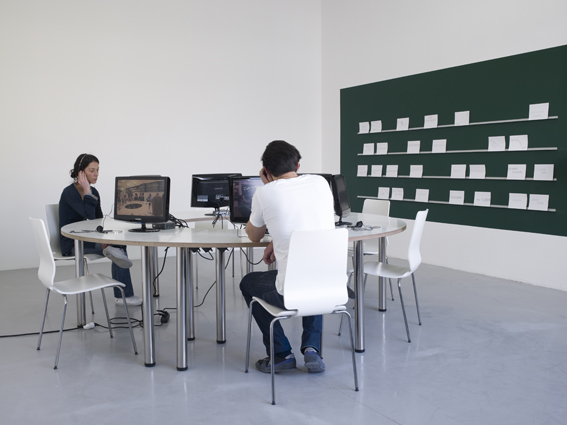
Ausstellungsansicht Tongue im Le Grand Café, St. Nazaire, Photo: Marc Domage
A community is by definition a social grouping united by ties that are either voluntary (intellectual affinities, a shared culture) or imposed (family, ethnic or national ties...). This question of "living together" (building, ritualizing, struggling together) always makes reference to an idea of poetic or political engagement. In recent years, the question has been posed a great deal on an international scale, notably as a response to the 2001 attack on the World Trade Center. How do we think of the world together?
The idea is experienced in daily life on a more local scale. Some of the utopias of 1968 have taken form today with a disconcerting pragmatism, in self-managed business communities, residents collectives, cooperative working groups. The community as opposed to the individual: this familiar idea can also take form in architectural projects, inventing spaces in which the experimental is welcome, spaces such as those formulated by the philosopher Joseph Vogl - where one can unlearn, "un-know" or initiate new relationships with one another. In parallel, virtual communities such as Facebook or Twitter have taken over the world. These social networks, which mix avowedly commercial ambitions with an undeniable relational philosophy, profoundly fabricate the concept of community as it is formulated by younger generations. They even facilitate the success of some revolutions...
The exhibition CommunautÈ/Gemeinschaft bears witness to the way in which contemporary art takes hold of these realities and these interrogations. It brings together very diversely orientated researches, although each reflects the question of "being together". The works call upon the fields of architecture, labour relations and politics, and likewise fashion, music and language: numerous domains grounding artistic positions that are always thought through in specific contexts.
Eva Prouteau
Open daily except on Mondays and days off from 14:00 to 19:00
On Wednesdays from 11:00 to 19:00 Free entrance
_ _ _ _ _ _ _ _ _ _ _ _ _ _ _
KÜNSTLERISCHE KOMMUNIKATION UND INTERVENTION IM SOZIALEN RAUM
im Rahmen von "ANNENVIERTEL! Die Kunst des urbanen Handelns"
>rotor< Graz
Ausstellung: 11. März - 14. Mai 2011
Eröffnung: Donnerstag, 10. März 2011, 20 Uhr
mit: Christoph Schäfer (Hamburg), Jeanne van Heeswijk (Rotterdam), Oda Projesi & Nadin Reschke (Istanbul / Berlin), public works (London)
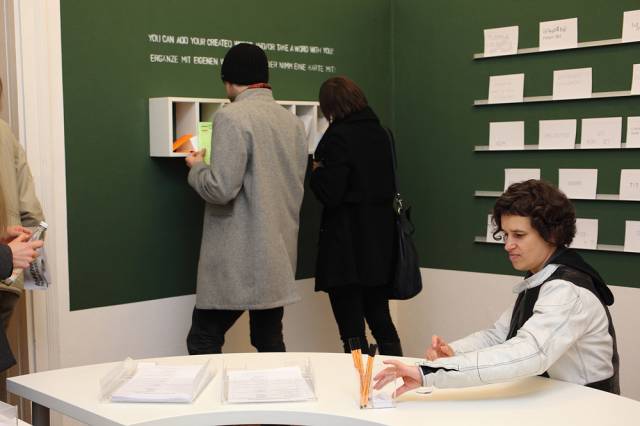
Foto: J. J. Kucek
Künstlerische Kommunikation und Intervention im sozialen Raum. Vier Beispiele aus verschiedenen Städten, die aus unserer Sicht besonders gut gelungen sind und die wir unserem Publikum präsentieren möchten.
http://rotor.mur.at/frameset_programm-ger.html
_ _ _ _ _ _ _ _ _ _ _ _ _ _ _
Communauté / Gemeinschaft
Kunstverein Wolfsburg, 27.11.2010 – 06.02.2011,
Eröffnung: 26.11.2010, 19h
Künstler/innen: Lara Almarcegui (E/NL), Bertille Bak (F), Johanna Billing (SE), Jeremy Deller (GB), Oda Projesi & Nadin Reschke (TR/D), raumlaborberlin / Markus Bader (D)
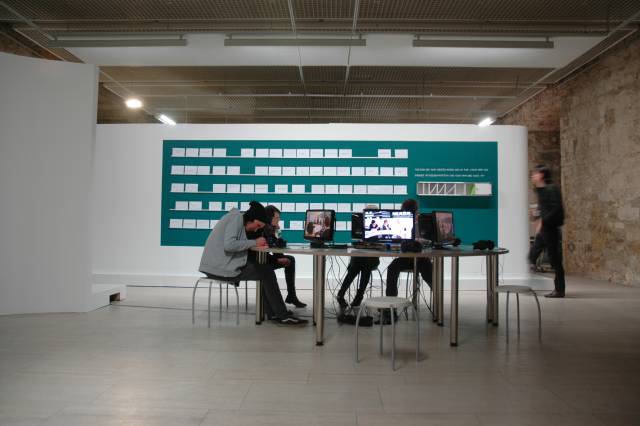
Abb.: Ausstellunsgansicht TONGUE im Kunstverein Wolfsburg
Seit einigen Jahren wird die Idee der Gemeinschaft erneut hinterfragt, untersucht und auch direkt verwirklicht. Utopische Lebens- und Arbeitsideen, in der Linken der 1968er Jahre geboren, finden ganz selbstverständlich Form in einem Boom von Hausprojekten, Baugruppen, Genossenschaften und kollektiven Arbeitsgruppen. Die Gemeinschaft versus des Einzelnen erfreut sich, verortet in architektonischen Entwürfen und Arbeitsgruppen, großer Beliebtheit. Gleichzeitig verfolgen virtuelle Gemeinschaften wie Facebook und StudiVZ eine Idee von Gemeinschaft, die neben der Vernetzung auch kommerziellen Interessen dient, wie sich am Beispiel des Verkaufs des Studentennetzwerks StudiVZ im Jahr 2007 auf erstaunliche Weise gezeigt hat. Diese temporären und flüchtigen aber dennoch Gewinn bringenden Verbindungen prägen momentan den Begriff von Gemeinschaft einer jüngeren Generation.
Die Frage in welchen Formen sich Gemeinschaften heute und besonders vor dem Hintergrund wirtschaftlicher Geschehnisse bilden, soll in der Ausstellung anhand von künstlerischen Arbeiten weitergedacht werden. Dabei spielen die ausgewählten Bereiche Architektur, Arbeit, Politik sowie Mode, Musik und Sprache als Verortungen eine Rolle.
Kuratorinnen: Anne Kersten & Sophie Legrandjaques
--
Kunstverein Wolfsburg
Schlossstraße 8
38448 Wolfsburg
www.kunstverein-wolfsburg.de
Öffnungszeiten:
Mi-Fr: 10-17h, Sa: 13-18h, So: 11-18h
English Version
Communauté / Gemeinschaft / Community
Kunstverein Wolfsburg 27.11.2010 – 06.02.2011,
Opening: 26.11.2010, 19:00
Le Grand Café, St. Nazaires 19.03.2011 – 08.05.2011,
Opening: 18.03.2011, 18:30
Artists: Lara Almarcegui (E/NL), Bertille Bak (F), Johanna Billing (SE), Jeremy Deller (GB), Oda Projesi & Nadin Reschke (TR/D), raumlaborberlin / Markus Bader (D)
The concept of community has thus not only become the subject of inquiry and debate in recent years but has also been put into practice. Utopian, leftwing ideas developed around 1968 are manifest today with great matter-of-factness in the form of house projects, "self-build" communities, (commercial or residential) collectives, and collective working groups. The community as opposed to the individual is proving very popular, taking shape as architectural design and working groups: spaces that invite experimentation or, as philosopher Joseph Vogl puts it, spaces of un-knowing (An Architektur, Nr.10, 2003). Simultaneously, virtual communities such as Facebook or the student network StudiVZ are pursuing a concept of community that serves commercial interests as well as social networking, as the sale of StudiVZ in 2007 clearly demonstrated. It is these temporary and fleeting yet nonetheless profitable networks that decisively shape the younger generation's concept of community today.
The question as to which form communities take today, particularly given current economic developments, will be explored further in the exhibition Communauté / Gemeinschaft / Community by artworks that pursue several possible directions. In particular the fields of architecture, labour relations and politics and likewise fashion, music and language are engaged to ground the various artistic departures in specific contexts.
Curators: Anne Kersten, Sophie Legrandjaques
_ _ _ _ _ _ _ _ _ _ _ _ _ _ _
ID
Contemporary Art Indonesia
Kunstraum Kreuzberg Bethanien, 11.12.2010 – 13.02.2011,
Eröffnung: 10.12.2010, 19h
Künstler/innen: Sally Moira Busse, Setu Legi, Yudi Noor, Sara Nuytemans & Arya Pandjalu, Rebecca Raue, Nadin Reschke, Prilla Tania, Rizki Resa Utama, Jorinde Voigt, Otty Widasari & Andang Kelana: Forum Lenteng [Kollektiv], Anang Saptoto: Ruang MES 56 [Kollektiv]
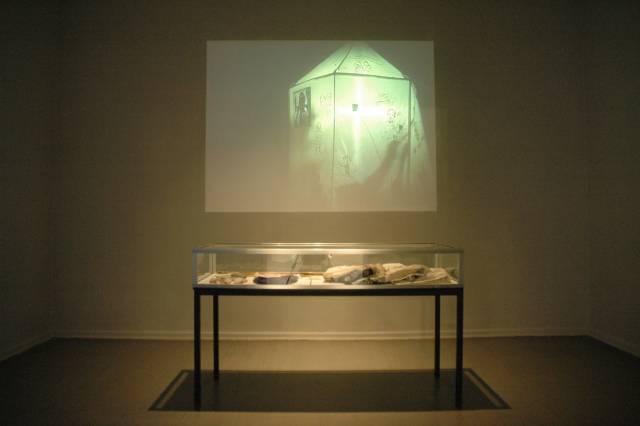
Abb.: Ausstellungsansicht "so far so good" Kunstraum Kreuzberg
ID - Contemporary Art Indonesia ist ein Projekt von Nya Luong und J.C. Lanca in Zusammenarbeit mit dem Kunstraum Kreuzberg/Bethanien und wird durch den Hauptstadtkulturfonds gefördert.
Berlin, Oktober 2010: ID - Contemporary Art Indonesia ist eine – sich bis zur Finissage ständig wandelnde - Ausstellung mit elf künstlerischen Positionen, die um das vielfältig interpretierbare Buchstabenpaar ID kreisen. ID versteht sich hier sowohl als Kürzel für Indonesien als auch für Identität. Die Fotografien, Zeichnungen, Installationen und Videos der internationalen KünstlerInnen thematisieren nationale, virtuelle, individuelle und kollektive Identitäten.
Ein wichtiger Diskurs im Spannungsfeld dieser Topoi des Selbst ist die Frage der nationalstaatlichen Identität. „Wir wollen nicht nur einem deutschen Publikum die zeitgenössische Kunst des südostasiatischen Archipels vorstellen und Interesse oder Verständnis für das Andere fördern.“ betont J.C. Lanca, Mitbegründer und Koordinator des Projektes. „Uns geht es vor allem darum, die Grenze zwischen dem Eigenen und dem Anderen zu reflektieren und sie im wechselseitigen Austausch aufzulösen.“ In der künstlerischen Auseinandersetzung wird so dem Interkulturellen eine Bedeutung zugewiesen, anstatt es als bloße Worthülle zu verwenden.
Die Mehrheit der Arbeiten entstand und entsteht explizit für die Ausstellung im Kunstraum Kreuzberg/Bethanien. Sie werden konzeptuell und in der Umsetzung durch die künstlerische Leiterin Nya Luong begleitet.
Ein kulturelles Rahmenprogramm mit Symposium, thematischen Führungen und ein – von Philip Widmann zusammengestelltes – Kinoprogramm zusammengestellt im FSK in Kreuzberg begleitet die Kunst. Zur Ausstellung erscheint ein Katalog.
Ausführliche Informationen: http://www.id- berlin.org
Kunstraum Kreuzberg Bethanien
Mariannenplatz 2
10997 Berlin
Öffnungszeiten: täglich: 12 - 19 uhr
Eintritt frei
_ _ _ _ _ _ _ _ _ _ _ _ _ _ _
Selected Artists (2009)
Stipendiatinnen und Stipendiaten des Arbeitsstipendiums für Bildende Kunst des Berliner Senats 2009
Heiko Blankenstein, Esra Ersen, Daniela Comani, Martin Dörbaum, Kerstin Gottschalk,Farida Heuck, Laura Horelli, Kei Kito, Pauline Kraneis, Adrian Lohmüller, Christine Meisner, Angela Melitopoulos, Rebecca Michaelis, Julia Oschatz, Katja Pudor, Nadin Reschke, Birgit Schlieps, Arne Schreiber, Ella Ziegler
Neue Gesellschaft für Bildende Kunst (NGBK) Berlin
23. Januar – 14. Februar 2010
Eröffnung: 22. Januar, 19h Täglich 12 - 19 Uhr Do - Sa bis 20 Uhr
|